The brief
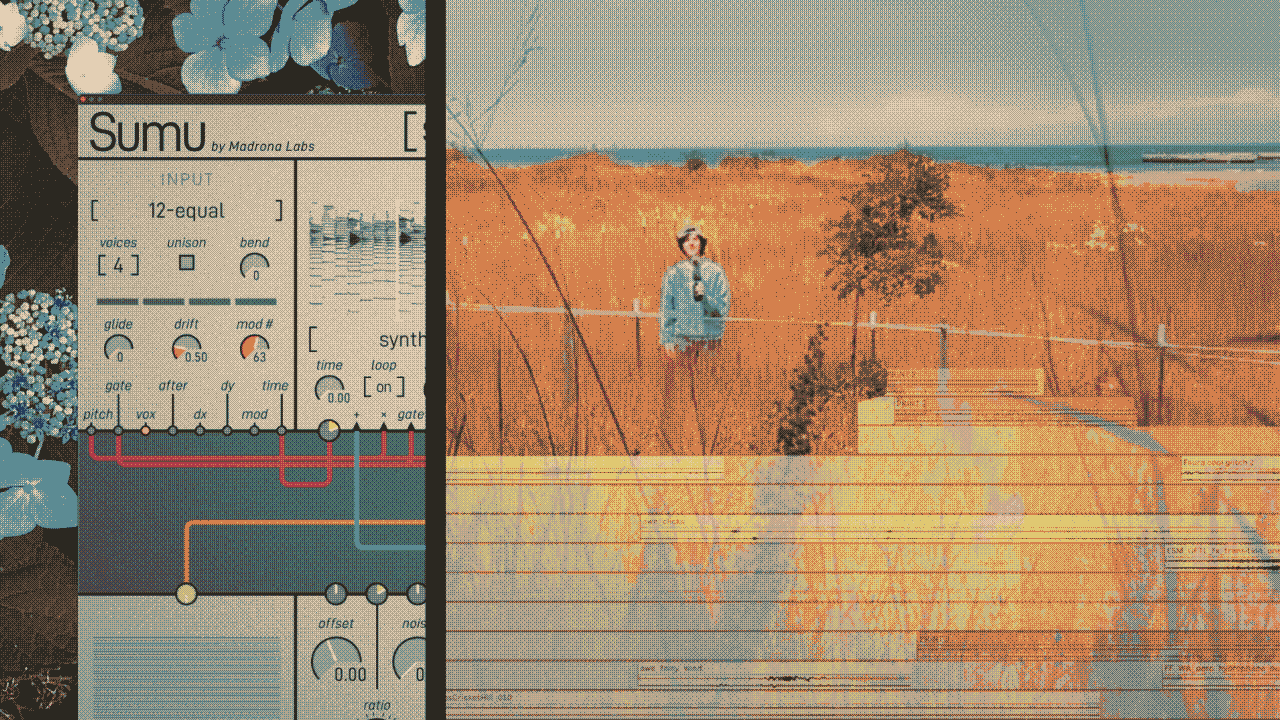
A longform YouTube video demonstrating how to make “botanica” style music using Madrona Labs instruments. The goal was to show off the flexibility of these plugins to an audience of people interested in this sound-design-heavy microgenre.
The process
The idea for this video came from noticing an emerging sound design trend in music production. Uplifting nature-themed electronic music infused with maximalist sound design gestures. I couldn’t put finger on at first, but learned the term “botanica” had been coined to describe it. This dovetailed perfectly with my work with Madrona Labs, as their plugin Sumu lends itself well to these kinds of sounds.
Work on the video began in earnest by researching the “botanica” aesthetic. I identified 5 key features of the microgenre:
- Acoustic instruments - Felt piano and strings especially.
- Spectral effects - often achieved by pushing the limits of the noise reduction in FL Studio’s Edisyn.
- Granular resampling - complex sound design is achieved by processing audio again and again.
- Foley samples - tactile/kinetic qualities become the focal point through the use of layered sound effects. A rolled piano chord may be paired with gusts of wind, rushing water, or crashing rocks.
- Dynamics - the flow of a botanica piece is goverened by sounds arriving and departing in exciting ways. The contrasts of soft, loud, slow and fast sounds is pushed for dramatic effect.
- DAW timeline videos - Botanica compositions are most often found as videos of scrolling DAW timelines on social media. This makes the microgenre unique in that there are more examples of behind the scenes clips than songs.
The process continued with by creating my own botanica composition using the Madrona Labs instruments Sumu and Kaivo, and recording the process as I went.
I then dove into my usual video production process. Writing an entertaining yet informative script, recording voiceover, and editing!
The result
The most-viewed video on the Madona Labs YouTube channel (so far) and a shift towards a younger audience.
Before the video was published, 55% of Madrona Labs’ audience was 35+. 80% of views on the Botanica video however, were younger. In the months since, Madrona Labs’ audience both grown and shifted younger overall. The 25–34 segment that was 31% previously is now 90% of its audience (at the time of writing).
This translates to increases brand awareness of Madrona Labs among younger sound design enthusiats.
Funnily enough, I played a gig with my band at a University the following week, a student approached me afterward and asked, “are you that guy from YouTube”? That was a first!
What I learned
A good topic choice is key to YouTube suggesting your video and increasing traffic.
Over 70% percent of views came from YouTube recommending the video on the homepage. 20% came from recommendations alongside other videos about botanica, or the search bar.
For better or for worse, YouTube’s goal is to maximize user engagement time. YouTube’s algorithm sensed that my video would fit well in a string of other videos, likely leading to more time spent on their platform. This quality is why it was shown to interested eyeballs. The art of making YouTube videos is about balancing that force with the things you love and believe are worth sharing.